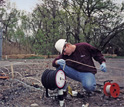
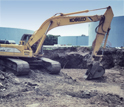
Site Assessments
&
Remediation Project Examples
Waterfront Redevelopment of Former Petroleum
Terminal
Norwalk, CT
Client: Moran
Towing Corporation
Description: This
abandoned waterfront parcel located on the
Norwalk River was purchased by the Moran Towing
Corporation for potential redevelopment as a
corporate office building and marina
complex. In addition to its use as a bulk
petroleum terminal and gasoline service station,
historical records indicate the site has a rich
history of industrial use including a foundry,
boiler manufacturing plant, and hat
manufacturing business. Triton performed a
comprehensive site investigation, completed a
remedial investigation, designed a remedial
action plan, and is currently completing
remediation at the site.
In accordance with the Connecticut Transfer
Act, the project team collected site
characterization data and evaluated known and
suspected oil and hazardous material
releases. The project team conducted soil
sampling activities, installed groundwater
monitoring wells to evaluate groundwater
quality, and completed soil vapor monitoring
activities to determine if benzene
concentrations in soil vapor required
remediation. The investigation results
indicated that previous site activities had
resulted in widespread contamination of soils
with petroleum products, metals, and VOCs.
Following the completion of investigation
tasks, Triton developed a conceptual site model
and a remedial action plan (RAP) which specified
the required steps for compliance with the
RSRs. The RAP calls for the excavation of
1,300 tons of contaminated soil, the
installation of an air sparging/soil vapor
extraction (AS/SVE) system as well as engineered
controls to isolate historic fill. Cost
estimates for the remedial work have been
prepared to assist the client with planning
efforts for the proposed redevelopment of the
site which will include a potential marina
component.
Role: Environmental
site assessments (Phase I, Phase II, Phase III),
soil and groundwater investigation,
decommissioning and dismantling of petroleum
storage equipment, development of a RAP, and
future site remediation and LEP verification.
|
 |
|